Memorize That Feeling
by Kendra Watkins, Faculty Fellow
I have a confession to make. I do not remember all of the Torah I have learned. Whether for my work here at SVARA, my classes in Rabbinical School, or my own learning, some of it sticks, but not all of it. Having spent the entirety of my adult life engaged in some kind of Jewish learning, I used to be embarrassed by this. For a long time it felt like a personal shortcoming. How could I engage meaningfully and deeply with a text and then, one day, simply not remember it? It made me doubt whether I was truly present in chevruta, or if I was actually honoring my commitment to bringing my full self to this tradition. But lately, I’ve been reminding myself that learning as a spiritual practice is not about accumulating a certain amount of text or acquiring knowledge just to say that you’ve acquired it. If anything, it’s about becoming more human in the process of learning.
In Kohelet Rabbah, we learn that this forgetfulness is a feature, not a bug.
רבי אבהו אמר זה שפוטה של תורה שאדם למד תורה ושוכחה רבנן דתמן בשם רבי יצחק דהכא ורבי טוביה בשם רבי יצחק לטובתו אדם למד תורה ושוכח שאלו היה אדם למד תורה ולא שוכחה היה מתעסק בתורה שתים שלש שנים וחוזר ומתעסק במלאכתו ולא היה משגיח בה לעולם כל ימיו אלא מתוך שאדם למד תורה ושוכחה, אינו מזיז ואינו מזיע את עצמו מדברי תורה
Rabbi Abahu said: This is the way of Torah – that a person learns Torah and forgets it. The Rabbis there, in the name of Rabbi Yitzchak here, and Rabbi Tuvia in the name of Rabbi Yitzchak: it is good for a person to learn Torah and forget it, because if a person learned Torah and did not forget it, they would busy themselves with Torah for two or three years and then return to busying themself with their work and not pay [Torah] any mind for the remainder of their life. Rather, because a person learns Torah and forgets it, they do not move or remove themself from matters of Torah.
Just as important as holding Torah close all the days of our lives is how we learn. Countless places in our tradition extol the virtues and necessity of learning with a chevruta, a beloved companion in Torah. Detroit-based movement leaders James and Grace Lee Boggs were known to say something to the effect of, “dropping out of your mother’s womb is not enough to make you a human being.” For the Boggs’ and for the Rabbis, the kind of learning that enables us to become, that is transformational both for the individual and the collective, is relational. When we encounter Torah in this way, it becomes the fertile ground in which, to borrow another phrase from the Boggs’, we grow our souls.
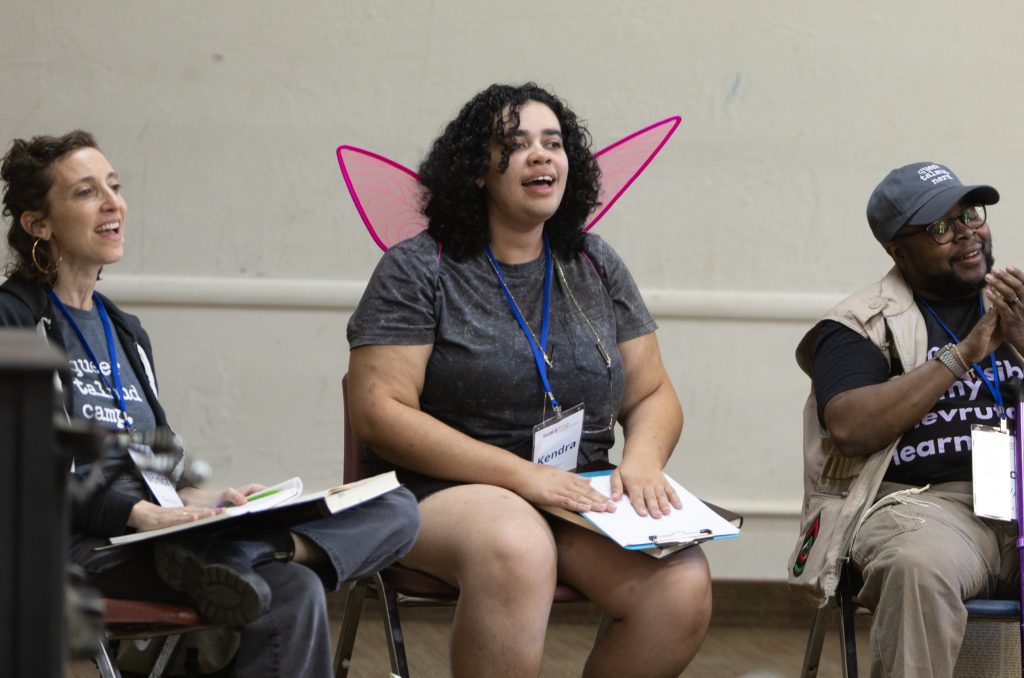
I may not remember every maneuver of the Rabbis on a given daf, but I do remember what it felt like for my chevruta to dedicate her learning to me in the beginning stages of my divorce. I couldn’t tell you what text we learned when another chevruta lost a parent, but I remember how our learning provided a much needed sense of consistency and a place for them to be seen. And sure, I remember the sugya Rabbi Bronwen and I prepared for Queer Talmud Camp, but mostly I remember how it felt to prepare for the emotional (and logistical!) journey of bringing our learning community together in-person after years of learning online. I remember all of these things. Thank G!d.
When we say the blessing – la’asok b’divrei Torah – we aren’t just blessing the book-learning, we are intentionally entering into a practice of holding each other in and outside of the beit midrash.