Mindful Returning
by Emet/Ari L. Monts, Faculty Fellow
Elul is a month of doing. As we get ready for the world to be reborn, Hamelech ba’sadeh, they say: The king is in the field. The Aybishter leaves their lofty palace to be near, asking us to come close. So we turn and return, making a pilgrimage back to Gd, and find ourselves traipsing through the tall grasses of teshuva.
Our tradition has much to say about our efforts to do teshuva. The prophets tell us that Gd desires it more than any sacrifice we could give, the noun shows up in 760 sources throughout the Talmud, and Rambam dedicates an entire book of his Mishneh Torah to the topic. If learning Talmud is a practice that changes us, I wonder if the other practices we weave into our learning spaces — that special SVARA fairy dust — can aid us in doing teshuva, as much as, if not more, than content ever could.
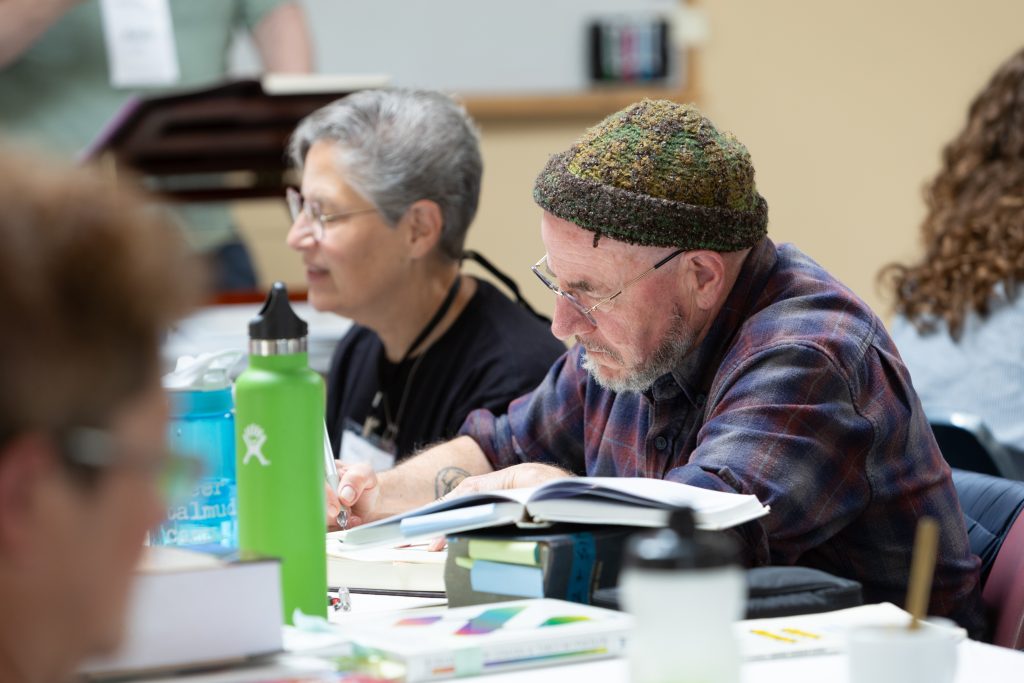
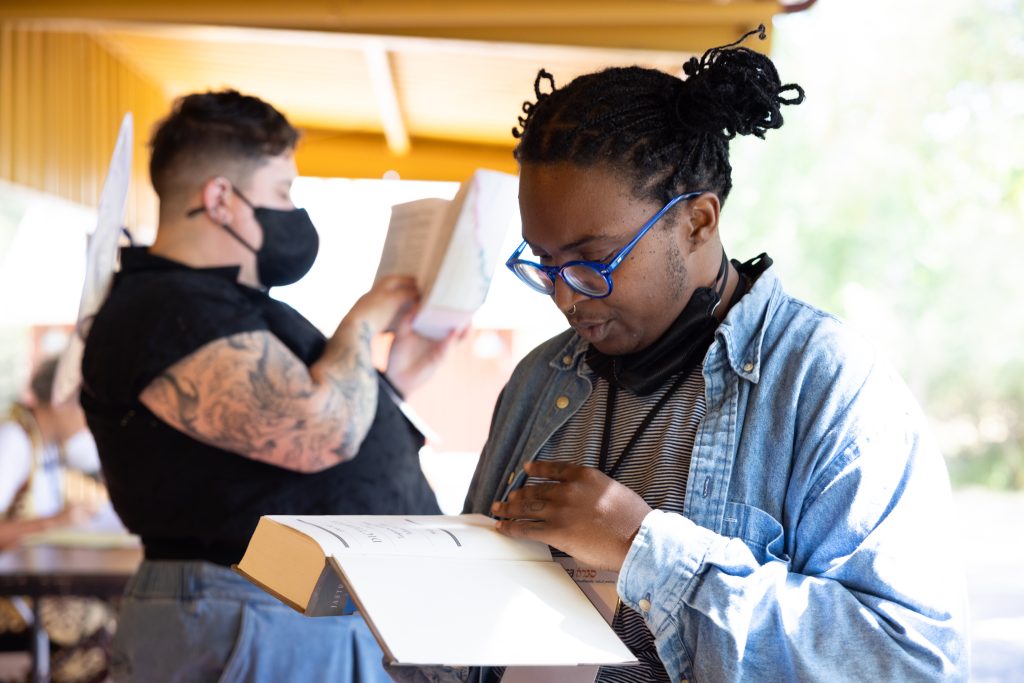
I love the feeling of learning in a SVARA class. In shiur I find joy, a predictable rhythm, and practices that stretch me and connect me to my tradition. We sing together, we witness each other as we discover our ownership of a text, we sit in the soup of binyanim and parts of speech and language. It’s a refreshing break from the normal pace of work and life and fortifies me even beyond the walls of the bet midrash.
And of course, while there is just something about learning with each of you that makes the space so special, the container is able to hold all of our queer magic due to thoughtful design. SVARA-trained teachers learn about the importance of COMP — culture, orientation, method, and pedagogy — in the SVARA bet midrash. Together they act as a matrix on which to map holistic learning. We learn that, “Structure, repetition, and consistency facilitate spiritual experience.” If we want the Talmud to do some sort of work on us, the learning process must work on us as well.
Part of what makes our classes so structurally sound are what Beth Barila might refer to as the mindfulness practices woven into our learning. She defines mindfulness as, “the process by which we become more self-aware through particular practices,” and includes practices such as music and singing, beholding, silence, centering, deep listening, religious rituals, and bearing witness as examples. As educators, these practices deepen our learners’ capacity to engage in the hard, vulnerable work of reimagining the tradition. When we open with nigunim, clap each other up after reading, or listen and share in chevruta, we are learning in ways that change us as we learn to be changemakers.
And we, like the Rabbis before us aren’t seeking to be radical changemakers for (solely) contrarian reasons. We know that the tradition will survive only as it changes and changes us. We change to get closer to ourselves and closer to our Source. In a word, our radically traditional engagement in Talmud is itself teshuva.
In the second perek of Hilkhot Teshuva, Rambam asks:
וּמַה הִיא הַתְּשׁוּבָה… וְיָעִיד עָלָיו יוֹדֵעַ תַּעֲלוּמוֹת שֶׁלֹּא יָשׁוּב לְזֶה הַחֵטְא לְעוֹלָם שֶׁנֶּאֱמַר (הושע יד ד) “וְלֹא נֹאמַר עוֹד אֱלֹהֵינוּ לְמַעֲשֵׂה יָדֵינוּ” וְגוֹ’.
And what is teshuva?…
When the Knower of Secrets will testify that a person will never return to this chet. As it is said, “And we will no longer say “[you are] our Gd” to the work of our hands.
Or, even more interpretively, teshuva happens when we value how we work more than what we make. Teshuva can’t happen if we need to be right, or if we have decided the outcome without the input of the other person. Just like learning Talmud, it takes time, slowness, attention to detail, being with, and openness. If we have already decided what we will learn, we can learn nothing. If we’ve already decided the outcome of our efforts toward teshuva, it as if we have done nothing at all. How can we change if we refuse to be changed? The process matters more than the product, both in our relationships and in our learning.
And so we emphasize process over product in our mindful Talmud classroom, which in turn primes us for all sorts of other spiritual work. Teshuva is a practice, it takes doing, and doing again, opening yourself up to new ways of being and knowing yourself and the world. And I have seen SVARA learners open themselves up to that kind of discovery week after week in the bet midrash. This work is real, and big, but HaShem is near, and you are prepared. So go; come back.