Tenderness In These Times
by Lauren Tuchman, SVARA Fellow

What a time to be alive. I find myself, as I imagine many of us do, navigating bouts of deep existential despair. Even on my better days, I experience the felt sense of being pulled under by the enormity of what I’m holding on a personal and collective level. When I’m lost in that torrent of despair, I wonder whether those conditioned beliefs that I’m not enough—that the world is fundamentally not built to support my very existence, and that the very ground beneath me is conditional— are absolutely true. As if there’s no stability, no place for me to know in my bones that I am part of this world. There are moments when I wonder whether my life’s work means anything, whether the village of folks around me who loved and supported me into achieving what I have don’t matter at all. That they are inconsequential and can be ripped away in an instant. As my teachers put it, there are no guarantees. Change is the only constant.
I find tremendous comfort in the Buddhist idea that everything is impermanent, that all things arise and pass on the absolute level. Put another way, things don’t remain as they are forever. Understanding that somatically can help me be open to the full spectrum of my emotional experiences in this moment. It is easy to take impermanence as a way to disengage. If everything inevitably will change, why act skillfully for a better world? I find that knowing that change is both possible and inevitable allows me to hold onto hope and resolve to never give up on the world I yearn for, even (and especially) in those moments when hope feels like a luxurious fantasy at best.
Life lived on the social margins affords a profound perspective on the human mind in particular, and the human condition more generally. One of the many reasons I am so drawn to meditation practice is because I have known intimately what it feels like to work with unskillful mind states. Throughout my life, always being a visibly disabled person, I have been afforded a front row seat, as it were, to the wildness of the human mind and the impact that wildness has on others. I also know what it is to internalize core beliefs that reify, rather than reject, oppression. I never questioned the horrible idea that the world was not built for my existence. That was just a given. Of course, ableism and inaccessibility happen because I’m here conditionally. I am not part of the web of interdependent and interconnected existence. I’m an unfortunate burden, an aberration, and hopefully there will be enough support to kind of get by but never to flourish, of course.
I notice in my work inside disability community that this conditioned self-hatred shows up in how we interact with each other and also in terms of how resourced we’re able to be. If the piece of the pie to which I have access is smaller than the smallest crumb, and able to be ripped away at any moment, then I’ll do whatever I can to survive, but I cannot worry about the survival of others. The competition for the crumbs is endless, wearying and soul-crushing.
There’s a lot of talk about resistance these days, and I believe strongly that we must continue speaking out for our values, and using all the resources we have to protect our communities and push back against the harms inflicted upon us. When those in power rely upon the complicity and complacency of the silent majority, it is our sacred duty to be like Yitro, Moses’ father-in-law, who found ways to speak out against unjust systems. Our people know this work well. Let us not cease in it even though we may not bring it to completion.
We need not wait for external circumstances and conditions to change dramatically to build the community we yearn for. Indeed, this was the project of our rabbinic ancestors. The Talmud came to us at a time when our ancestors lived in societies that oppressed them and offered no political power. I am reminded, starkly in this time, that our people have lived most of the time in situations where those in power could not be relied upon, let alone trusted to care about our wellbeing.
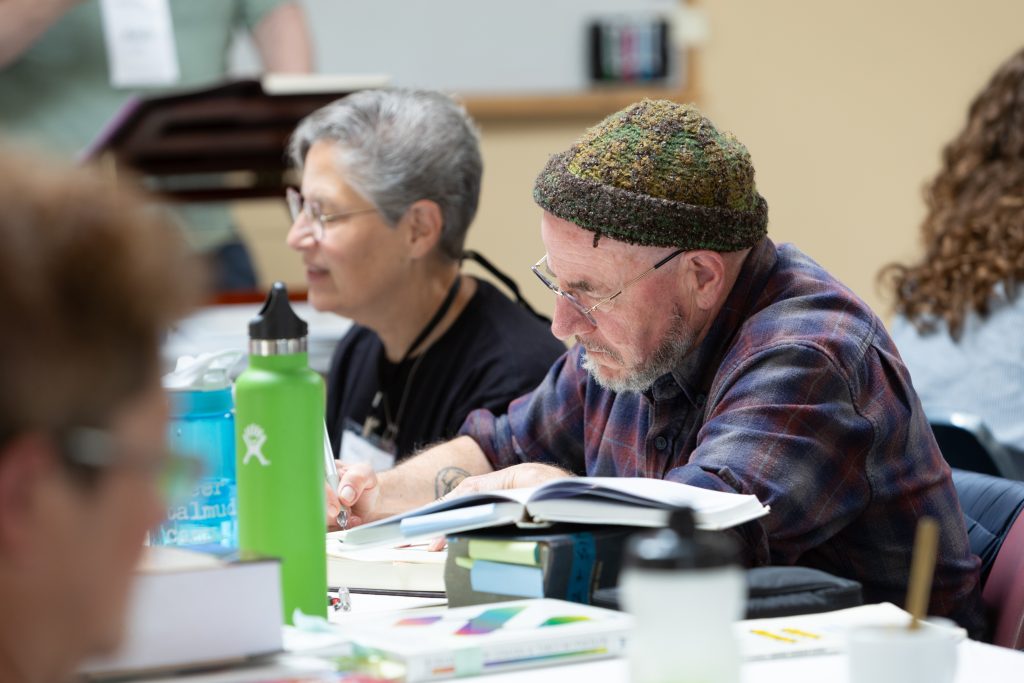
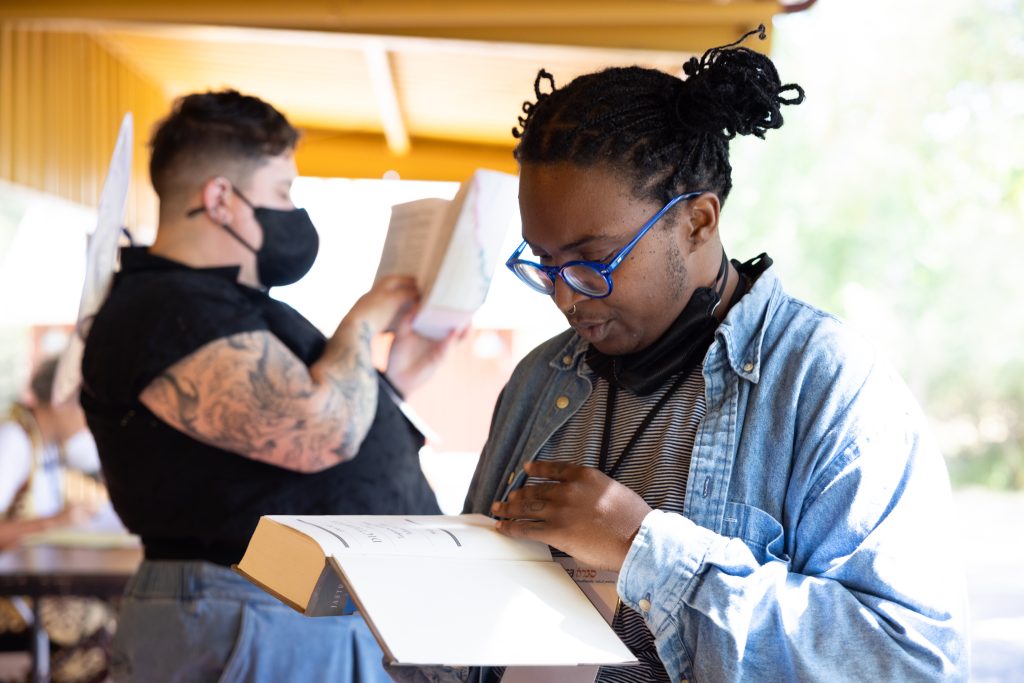
In so many ways, the Talmud is a blueprint for the society that yet could be. Robust, multi-vocal debates about how things are or could be, sharing ancestral wisdom, laying out law for creating a functional society and governing system, blessings for elevating the mundane into the holy, it’s all there, ready for us to immerse in. What an act of tremendous hope for a future as yet unknown as it was for our rabbinic ancestors to step outside their lives, often quite difficult ones, to sit and learn.
Perhaps we, too, can build that society, moment by moment. I believe that one of the many conditions that lead us to this time is that we are so isolated and disconnected from one another. Trust in institutions and basic facts has shattered. We don’t have deep enough relationships with one another to weather the inevitable storms and conflicts that arise in any human relationship. We’re stretched thin. Information is coming at us so quickly that our nervous systems are short-circuited and shutting down. In such isolation and loneliness, separation feels absolutely true. We aren’t part of the web of all beings on this planet. We’re in our own worlds, utterly disconnected and as a result of that disconnection, unable to will enough energy to care about people outside of our concern. How tremendously sad.
I invite us to start small. Perhaps we reach out to folks we haven’t talked with in a bit and ask about their lives with great sincerity and curiosity because we want to know them deeply. Perhaps we read a book by an author whose view on the world radically differs from ours. Perhaps we find moments in our daily lives to slow down and try a little tenderness. We never know how our heartfelt acts can change another’s day. May we find wisdom and sustenance in our care for ourselves, each other, and all beings with whom we share this life.