What Does This Mean and Who Does It Serve
by Emet/Ari L. Monts, Faculty Fellow

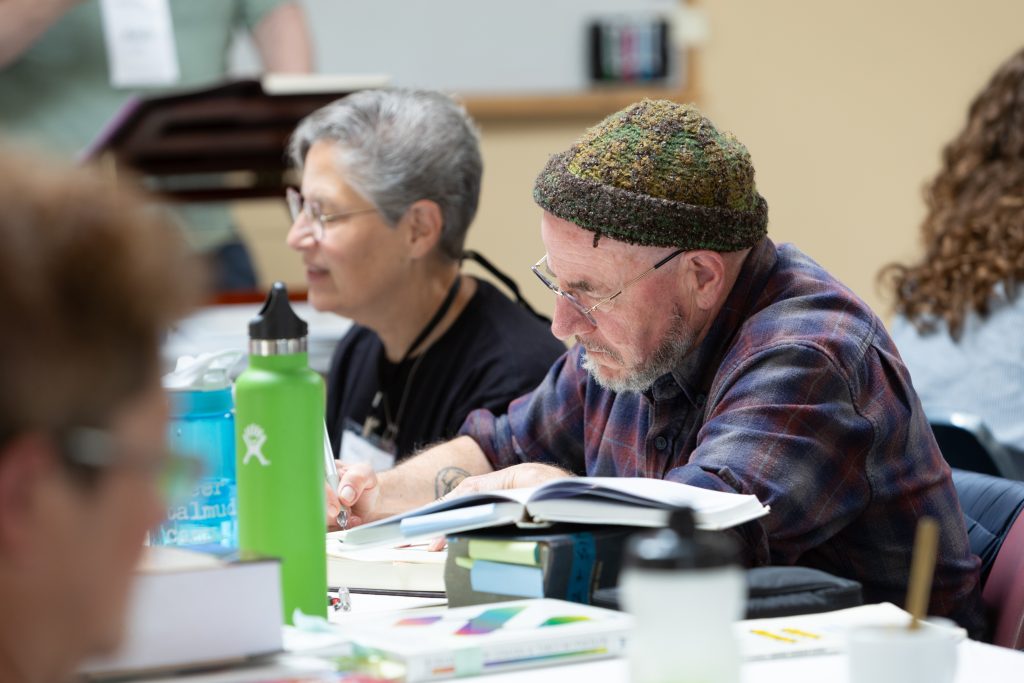
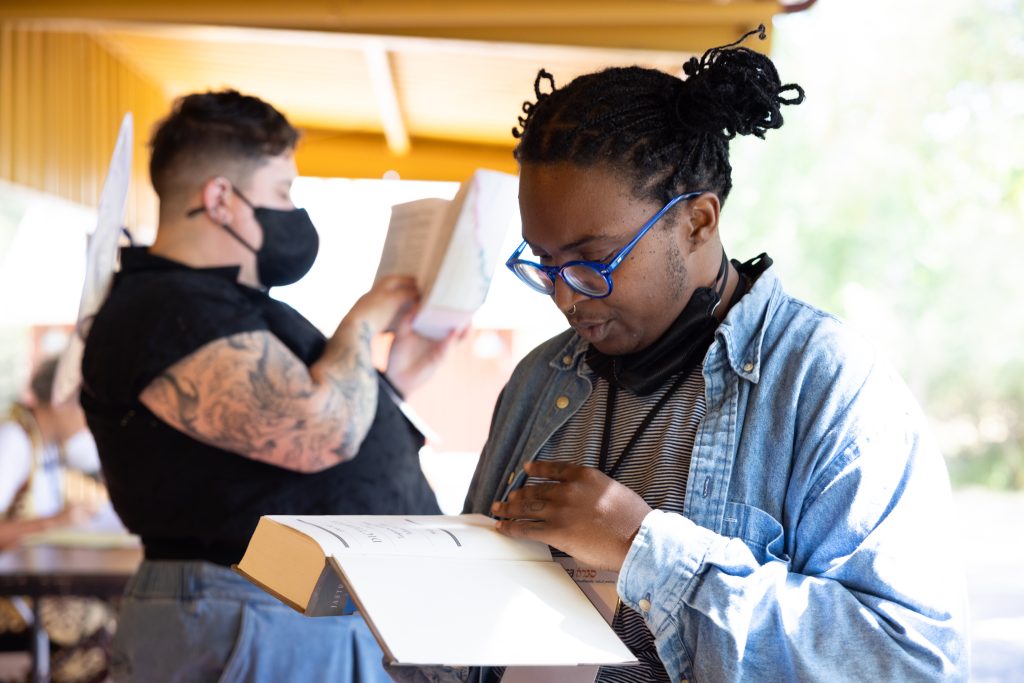
When we learn in the SVARA method, we begin with chevruta, a relational practice rooted in listening to and learning with and from a peer. It is here that we break down the words into all of their parts, and build confidence knowing what each part of each word means. It’s only after this that we can begin to dream together, to notice the richness of why our sages chose each word. And because we’ve trusted each other through the trenches, we are able to pull more out of each other and our meaning-making becomes so much deeper.
Sometimes when I talk about learning in chevruta, I’m afraid that I turn people off in my fervor about the practice. I love it. I think it will change your life. It has changed mine! I’m so fervent about it because learning in chevruta is one of the only consistent opportunities in my life to practice wading through something hard and be reminded that not only can I do hard things, but that they become so much less hard when I do them in deep relationship to others. Just as I do not learn Talmud alone, I do not, and I will not change the world alone.
Chevruta makes sense as the first step of SVARA’s cyclical method to learning Talmud because it immediately decentralizes the teacher, or the learner in front of the room. They do not become the expert of the text because they aren’t the first person to teach it to you. Instead, what our method offers is space for you and a peer to build a relationship with one another and the daf, on your own, first.
When I first started learning Talmud five years ago, my chevruta and I often had very little idea what we were doing. We didn’t know where to look up abbreviations, we didn’t have context clues for which entry in Jastrow was the most useful, we couldn’t recognize the “rhetorical moves” of the stammaim, and I, famously, confused look-alike letters all the time and refused to learn binyanim.
It was hard. And I am so grateful that despite, or perhaps because of the difficulty, that the method does not begin with us watching a teacher in shiur unpack the text for us. When we begin in chevruta, we are doing things as we learn them. Maria Montessori, an ancestral pedagogic mentor of mine, proposes in her speech, “The Form Education Must Take To Be Able to Help the World in Our Present Circumstances” that we are shaped by what we do, not by what things or knowledge we possess. “The use of things shapes man, and man shapes things,” she writes.
By immediately putting the tradition into your hands, we are hoping to emphasize that you, the learner, are already enough to become a shaper of our tradition. The spaces where you and your chevruta choose to wonder about, the words you focus on, that play is shaping the tradition as it is shaping you–even before you feel ready for “meaning making”. The chevruta process also emphasizes that the tradition–if we commit to using it, working with it, holding it in our hands–can shape us, as well.
Working through the text in chevruta comes first because the first step to changing the world from what it currently is to what it could become is articulating everything you can about what it currently is. You do this by looking at what’s in front of you, what it means, how it means what it means, and who it serves. In order to begin shaping something new, we need to take seriously what is right in front of us, look at it from every angle, and understand why it is like this and not that. The process of observing the here and the now as a way of constructing what comes next is Option 3. It’s slow, it’s intentional. It’s often tedious before it’s exciting, and it is transformative when we ask, together, “is that what I think it is?” We ask that question knowing that maybe it is and maybe it isn’t, but we will deal with the consequences either way. We become more resilient and more willing to lock into this for the long run.
Recently, I was talking with a teacher about how the more Talmud my chevrutas and I learned, the more observant we’ve become (your mileage may vary). She offered that when you spend so much time figuring out why a sugya uses this prefix instead of that one, or this root instead of that one, you might begin to take all of the tradition a little more seriously. You begin to understand the details that only come into focus when you refuse to stop asking questions. This, of course, is exactly what the Rabbis teach us when we learn Talmud: even as we shape Judaism, we find merit in the way it was shaped for us.