You’re Here. Who’s With You?
by Maggie Kraus, Communications Director
This time of year always arrives with equal amounts of stress and delight, but ever since I started working at SVARA, it has also become a season of witnessing just how deeply our yeshiva transforms people. Over the past few weeks, as I prepared for SVARA’s end-of-year campaign Building Our Collective Tomorrow, I sifted through hours and hours of interviews with our learners as they shared beautiful and brilliant reflections about how SVARA has impacted them. There were too many gorgeous moments to count, and one in particular stood out to me. Two different people, in two different cities, on two different Zoom calls, spoke with the deepest gratitude imaginable for the learning partnership they had developed together at SVARA. Their stories, separate but connected, illuminated the power of chevruta—the steadfast connection we know can be the foundation for a meaningful, imaginative, resonant Jewish life.
The first person shared that the rhythm of this chevruta learning had blossomed into a sort of sacred, self-perpetuating companionship:
If there is one thing I know will be true for the rest of my life, it’s that I will see my chevruta at least once every 10 days, because we will learn together at least once every 10 days. That is so special to me. It doesn’t feel forced and it doesn’t feel rushed, because the foundation of our relationship is supporting one another in a lifelong learning practice. I have such a fuller Jewish life because of that.
Some hours later, I encountered footage from another interview, and the pieces fell into place. Oh my gosh, I thought. This is the other half of that chevruta! Here, I heard the mirror image of that earlier sentiment:
I was just thinking, the people you meet through SVARA will change your life. I really, really feel that. To have found someone who I can meet week after week in the text, which is to say someone who helps me meet myself, and God willing, I do the same for them. It’s such a profound gift. I like to imagine in every lifetime we find each other.
Together, their words captured everything chevruta is meant to be at SVARA: a connection that shapes a learner’s inner world as much as their understanding of the text. Listening to the two of them speak, inspired and bowled over by the sweetness of it all, I wondered: who is my chevruta?
Crickets.
I am surrounded, on all sides of my being, by brilliant people who learn with me, dream with me, and journey with me. I have cried (so much) and laughed (even more) with these people. Together we have learned texts of all shapes and sizes together. We’ve supported each other, witnessed each other, uplifted and celebrated and challenged each other. So how was it possible that, when prompted to do so, I couldn’t name—immediately and instinctively—who my chevruta was? I had to figure this out.
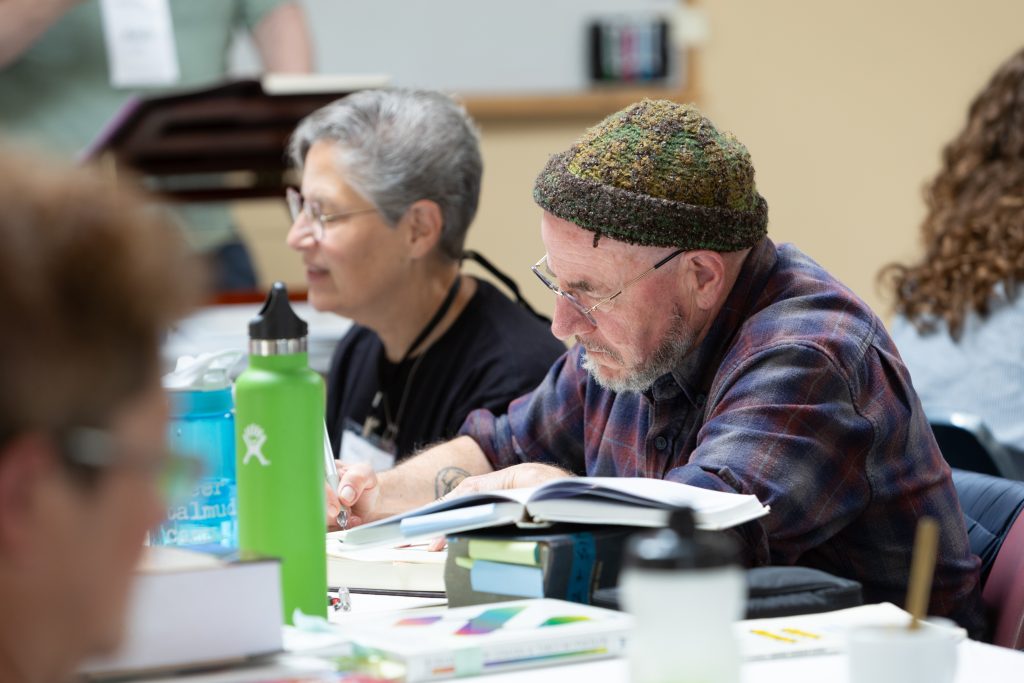
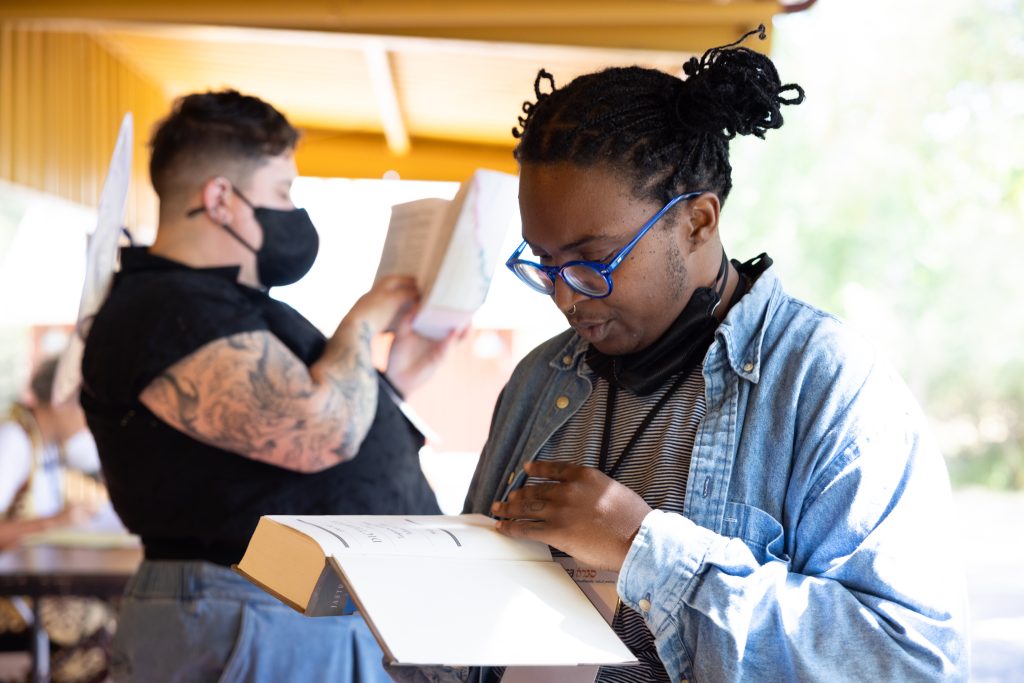
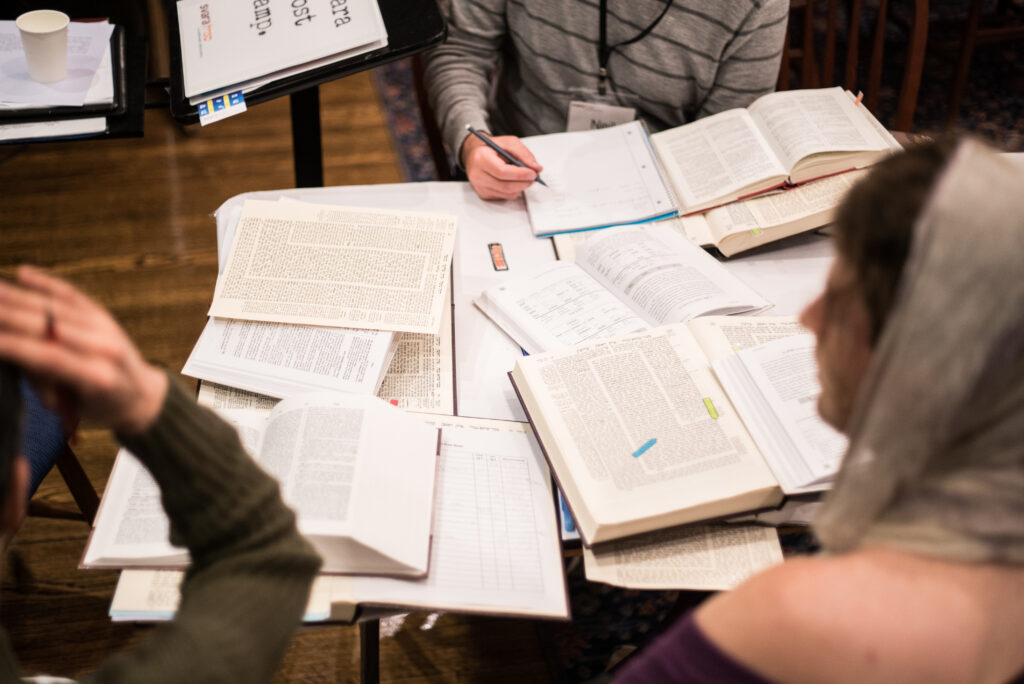
I decided to take the question way too far, as I am almost always inclined to do. I closed my eyes and imagined all the things that characterize learning in chevruta in the SVARA bet midrash. I pictured a big, cheerful room filled with long tables overflowing with books. I felt the sun coming in through large windows. I imagined the way Masechet Yoma, the first text I ever learned, felt as it opened in my hands. I pictured the bright shiny faces of queer and trans folks around me, laughing and thinking, swaying and speaking, eyes and hands flashing across everything spilling out in front of them. I zeroed in on the energy in this room in my mind and thought to myself, “Okay, you’re here now. Who’s with you?”
As this dreamy scene unfolded, and I looked across the proverbial table in this imaginary bet midrash, the face I saw across from me was mine. In this ethereal fever-dream of a fantasy, I am my own chevruta.
The practice of learning in chevruta demands curiosity, patience, generosity, rigor, and love, and these are qualities we are asked to cultivate for others. But how far can that go if we forget to extend the same things to ourselves? In that moment, I recognized something SVARA has been teaching all along: that personal transformation is not an afterthought of our tradition. The collective future we’re building together depends on the work we do inside ourselves first. And, thanks to the many ways SVARA scaffolds our learning, it’s work we may not even realize we’re doing. At least not at first.
Our founder and Rosh Yeshiva Rabbi Benay Lappe recently reflected on the statistical evidence that queer people now make up an unprecedented proportion of the U.S. rabbinate, explaining, “queer folks carry the same resilience, creativity, and reimagining that catalyzed rabbinic Judaism itself.” And if that’s true, which I deeply believe it is, maybe our ability to reimagine the world and our place within it begins with the self that looks back at us from the text: the self that senses it can finally trust where it is, the self that becomes steady enough to believe it can grow. Maybe, just maybe, the first step of the SVARA method is actually meeting ourselves for the first time (I’ll need to run that by Benay first).
As we bring this wild year to an end with the hope of a better tomorrow, I invite us all to take a moment to look up from the text and notice ourselves looking back. This season calls us to nurture that self, and through it, to help build the community and future our tradition depends on. Investing in SVARA is, at its core, investing in a place that allows us to meet ourselves first so we can meet everything that follows more fully. As one of these chevrutas shared so eloquently during their interview, “Financial donations are a community-building act. When someone asks me to contribute to SVARA, what I hear is: do you want to build this with me? And the answer is yes.”
My answer is also yes. What’s yours?